
Deck Oil vs Stain NZ: Which Finish Lasts Longer? (2026)
Deck Oil vs Stain NZ: Which Finish Lasts Longer? (2026)
Short answer: deck oil soaks into the timber and wants a re-coat about every 6–12 months; deck stain sits on the surface with pigment and usually goes 2–3 years between coats. On a damp, shaded NZ deck a penetrating oil is normally the safer bet on treated pine and kwila. On a sun-baked deck where you want a consistent colour, stain earns its keep.
Most of the tired decks we get called to across Franklin, Pukekohe, Papakura and Waiuku didn't fail in the timber first — they failed at the coating. Water got past a tired finish, sat in the grain, and rot followed. So the oil-vs-stain question is really a maintenance question. Here's how each finish behaves on a real NZ deck.
What deck oil actually does
Deck oil is a penetrating finish. It soaks into the grain rather than sitting on top, feeding the timber and shedding water from the inside out:
- Feeds and seals the grain — unsealed end grain and screw holes drink water like a straw; oil closes that path.
- Keeps the natural look — you see the grain and the timber's own colour, with a matte, low-sheen finish.
- Wears gradually — an oily deck fades and greys evenly; it doesn't peel, so the next coat is a clean-and-recoat job, not a strip-back.
- Re-coat interval: roughly every 6–12 months in NZ conditions. Spring (September–October) is the sweet spot, before summer UV hits.
Where oil loses: skip a year or two and the surface dries out, the grey fibres come up, and the next coat needs a sand first.
What deck stain actually does
Deck stain is a surface finish — pigment and binder in a film that sits on top of the boards:
- Blocks UV with pigment — the colour you see is doing the sun-protection work, which is why stains hold colour longer.
- Gives a consistent colour — handy on patchy, sun-bleached decks where boards have greyed unevenly.
- Longer between coats — typically 2–3 years on a deck that drains well and dries out.
- Re-coat interval: 2–3 years, but the prep matters more: any flaking old film has to be sanded or stripped back to bare timber first.
Where stain loses: if moisture gets in under the film — a damp shaded deck, boards that stay wet, or a coat laid over dodgy prep — it peels and flakes in sheets. A peeling stain is a strip-back job; a tired oil is not.
Deck oil vs stain at a glance
| Deck oil | Deck stain | |
|---|---|---|
| How it protects | Soaks into the grain | Pigment film on the surface |
| Look | Natural grain, matte | Consistent colour, more opaque |
| Re-coat interval | 6–12 months | 2–3 years |
| UV protection | Moderate | Good (pigment blocks UV) |
| Best on | Treated pine, kwila, damp or shaded decks | Sun-exposed decks, uneven colour to hide |
| How it fails | Dries out and greys if re-coats are skipped | Peels in flakes if moisture gets under the film |
| Switching finishes later | Light clean and sand | Full strip of the old film |
Which finish for your timber?
Treated pine — oil it, especially early. New pine is thirsty and moves as it dries. A penetrating oil lets the boards breathe and wear evenly while they settle. Stain on fresh pine is how you get flaking in year two.
Kwila / merbau — oil to hold the colour. Kwila oils out tannins when new (they stain pavers and walls), so let it weather a few weeks, then oil to keep that rich red-brown. If you're happy letting it silver off, skip the finish entirely and just keep the gaps clear.
A weathered grey deck — stain if you want colour back. Oil will not restore colour to grey timber; it will just seal the grey in. If the boards are still sound and you want the deck to look finished again, a stain is the honest option — after a proper sand.
Composite decking — neither. Composite boards carry their own cap and colour; oiling or staining them does nothing and can void the warranty. See our composite decking guide for what those decks actually need.
When a re-coat isn't enough any more
A finish can only protect sound boards. Before we quote a re-coat we lift a board near a corner and look at what's underneath:
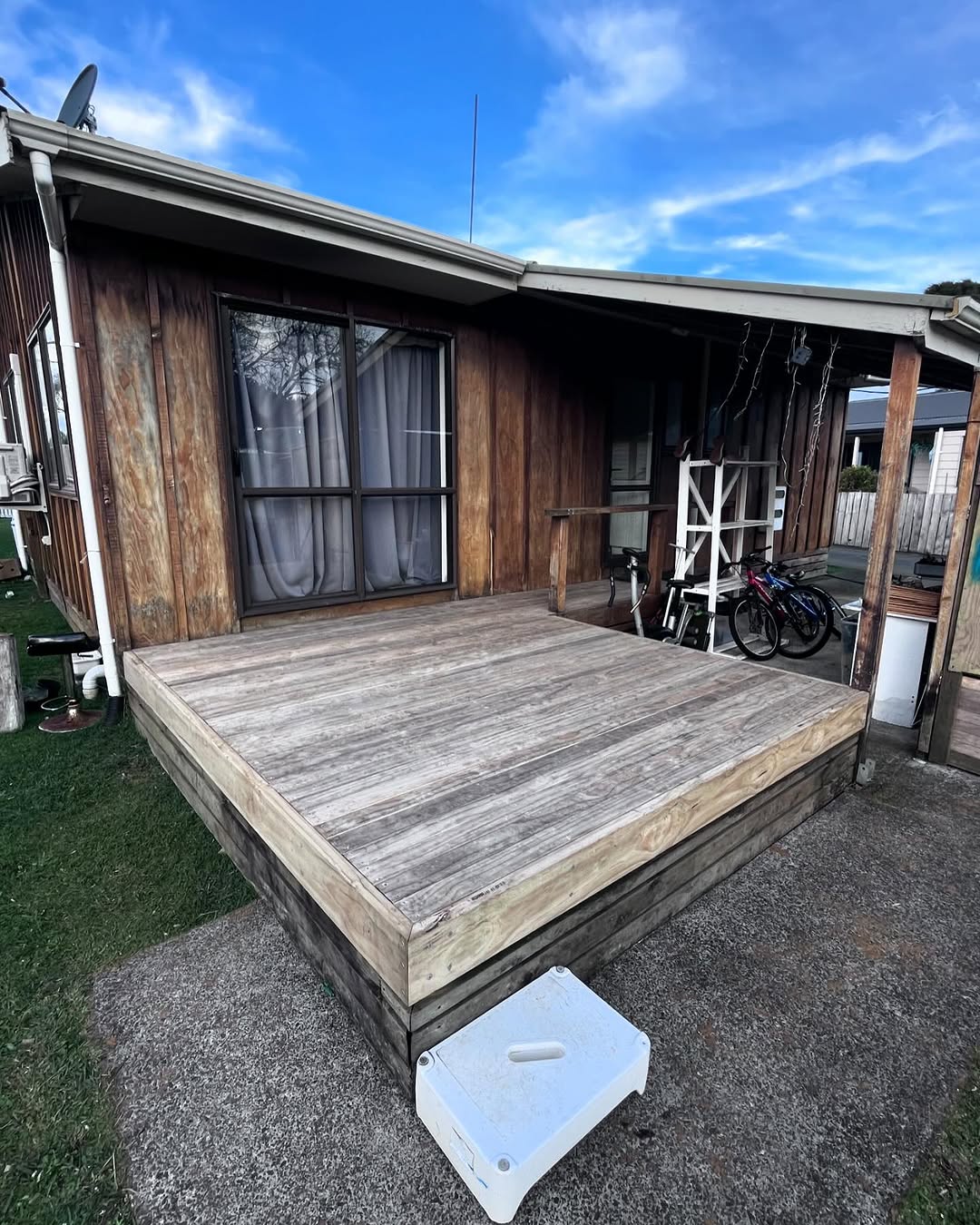
Waihi, before: boards greyed and tired. At this point the question is re-coat or relay — the frame decides.
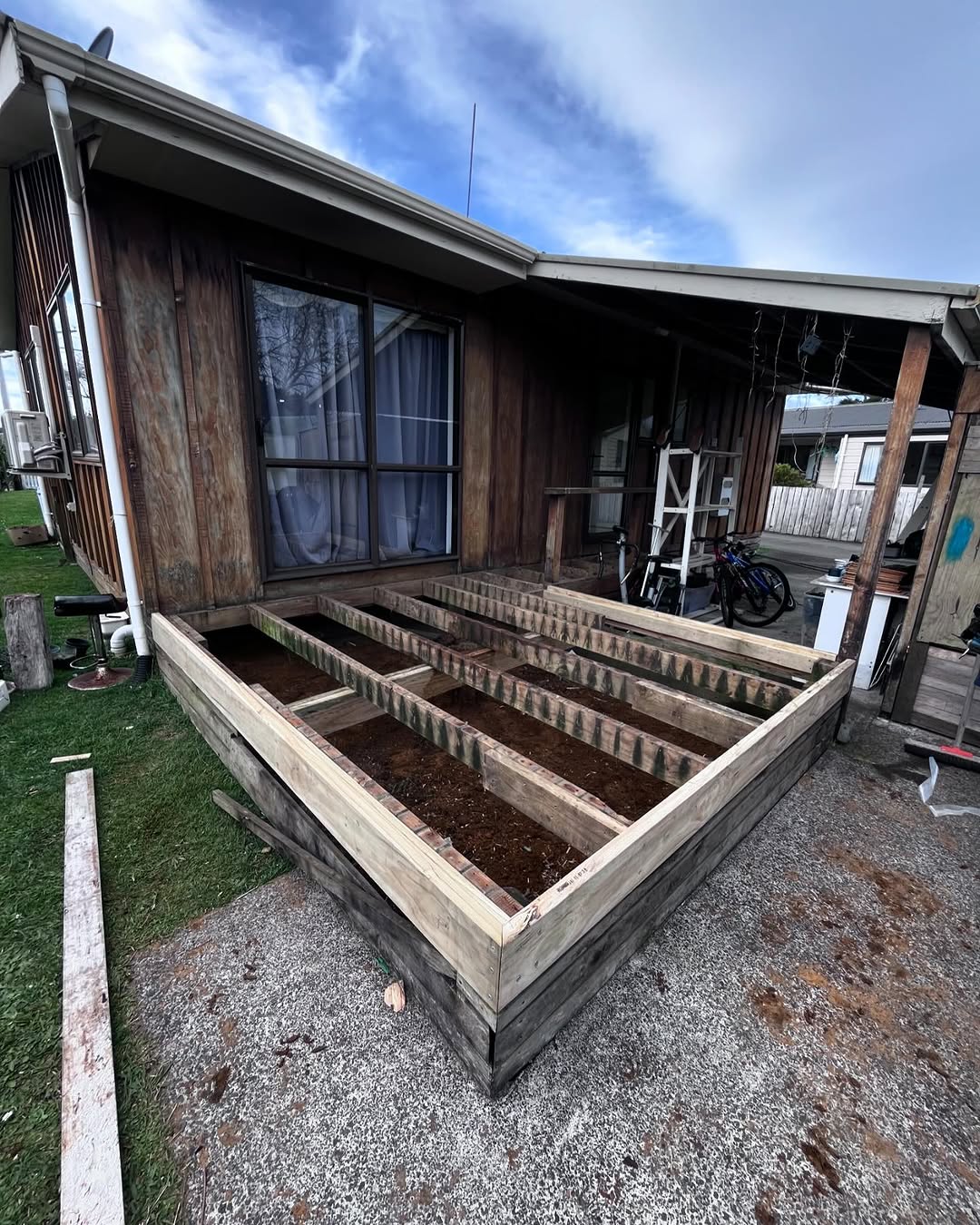
Boards up, joists exposed. Frame solid and level = re-coat or relay. Rotten bearers or rusted fixings = rebuild, and no finish changes that.
- Coating tired, boards solid → wash, sand, re-oil. A day's work.
- Boards rotten or springy, frame solid → a deck relay: new boards over the existing frame, then a fresh coat.
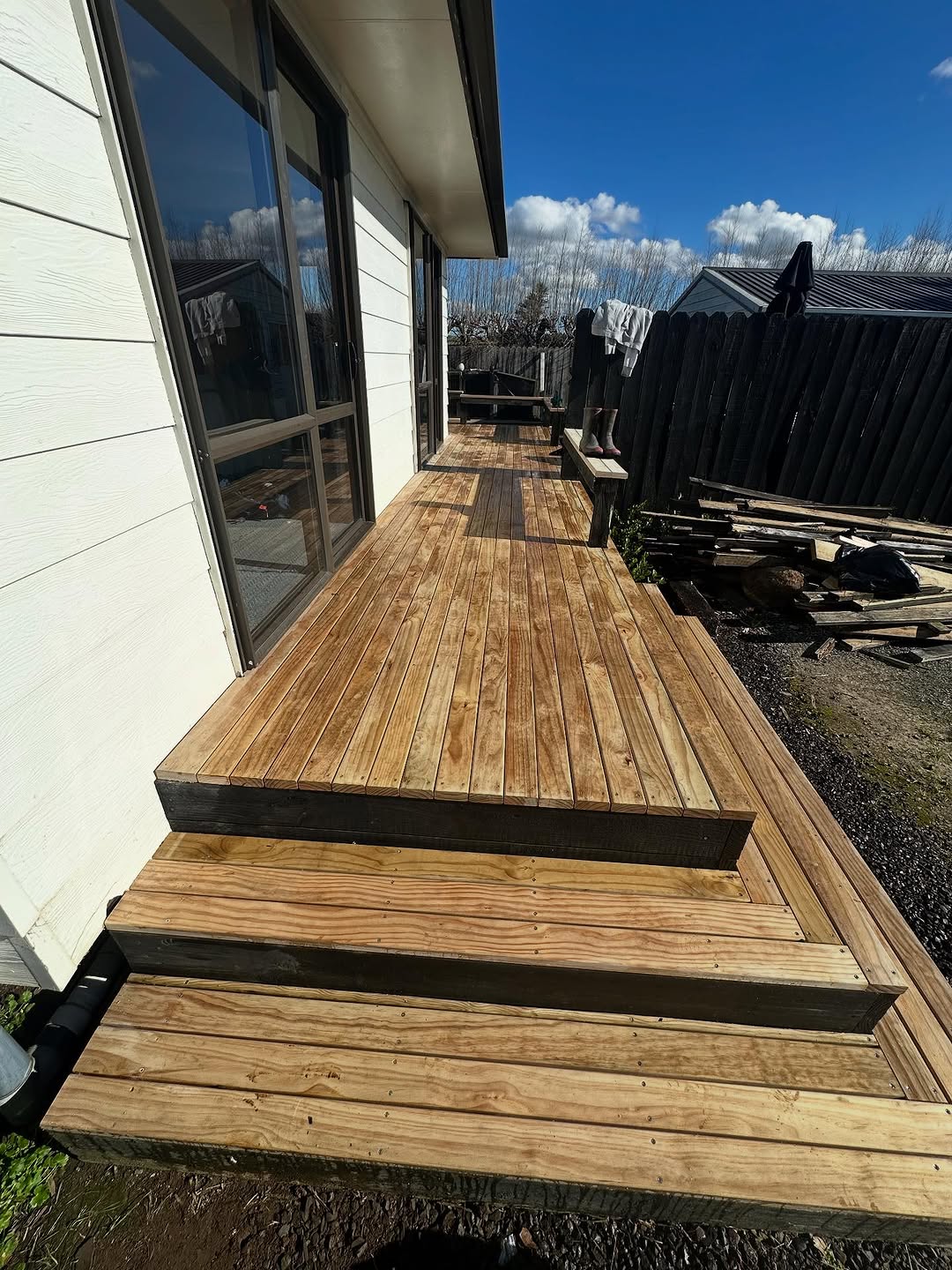
A relay finished and ready for summer — new boards laid with proper drainage gaps so the next coat actually lasts.
- Frame undersized, unlevel or rotten → full replacement. See what a deck costs in NZ for where that lands per m².
How to oil a deck properly
The job we run on a re-coat, in order:
- Clear and sweep — furniture off, leaves and grit out of the board gaps. Debris holds moisture against the boards and shows through the finish.
- Wash — deck cleaner and a stiff brush or low-pressure wash. Rinse well and let it dry 24–48 hours; oil on damp timber traps the water underneath.
- Sand what needs it — grey fibres and any flaking old stain back to bare timber. Oil over loose fibres just seals the fuzz in.
- Mask and protect — tape glass and aluminium, sheet the plants. Kwila tannins and oil splatter travel.
- Coat thin, along the grain — brush or pad, working a couple of boards at a time so you keep a wet edge. Two thin coats beat one thick one.
- Cure before use — 24 hours between coats, and keep feet and furniture off for 24–48 hours after the last one.
Pick a dry window with no rain forecast for 24 hours, and do it in spring before the summer sun starts cooking the boards.
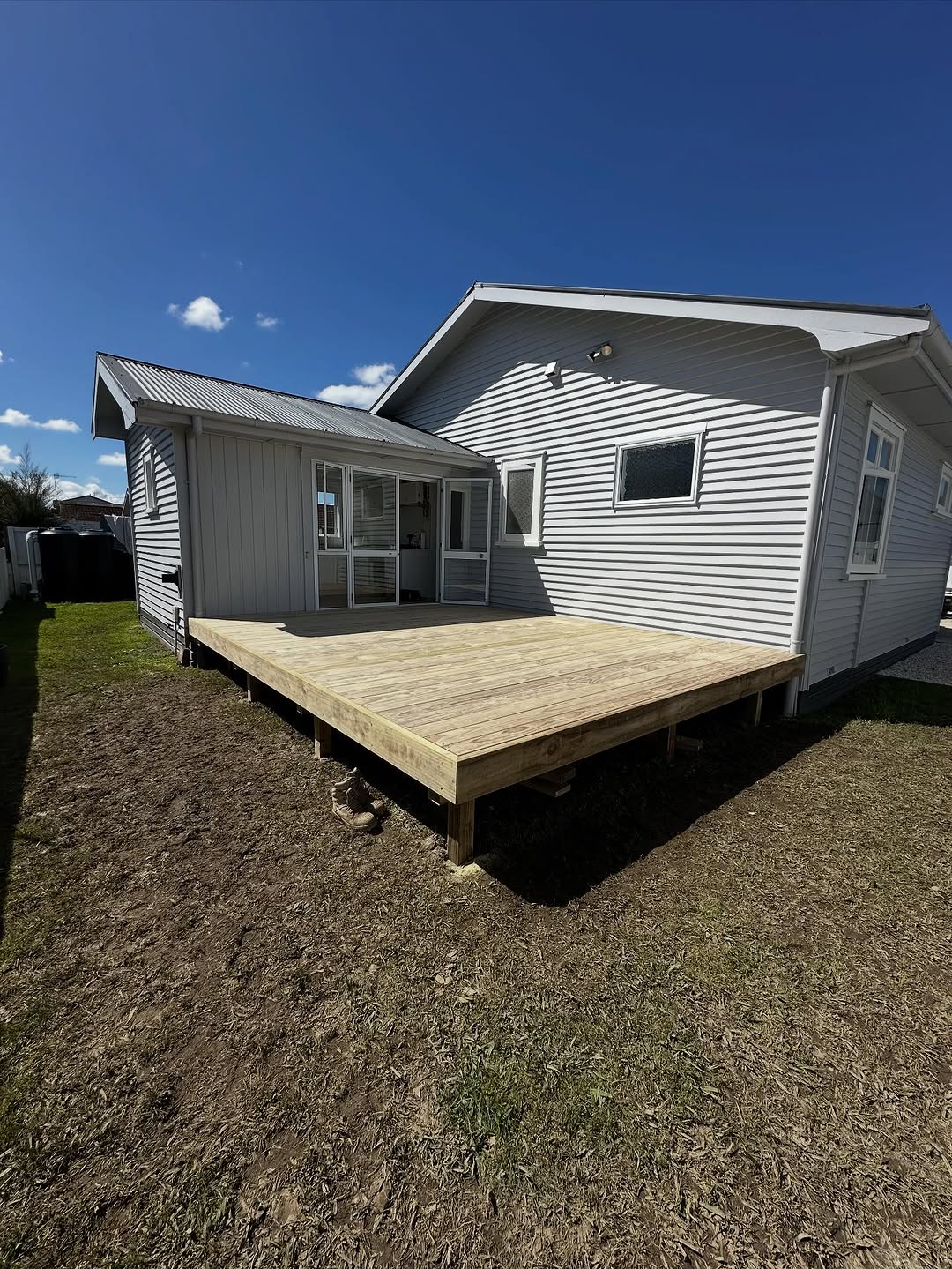
Freshly oiled treated pine deck in Hamilton — this is what an even first coat looks like.
How often should you re-oil a deck in NZ?
- North-facing, full sun: about every 12 months. UV is what eats the coat.
- Shaded, south-facing or damp sites: every 6–12 months, and watch for mould in the gaps — shade keeps boards wet longer than sun does.
- The splash test: flick water on the boards. If it beads, the coat is still working. If it soaks in and goes dark, book the re-coat.
Between coats, the cheap habits that double a finish's life: sweep the gaps each autumn, don't let planters, mats or boxes sit flat on the boards, and fix a new squeak or springy spot early — it's a ten-minute job now and a relay later.
Related Articles
- Deck Relay vs Replacement: Fixing a Rotting Deck in NZ
- How Much Does a Deck Cost in NZ? (2026 Pricing Guide)
- Kwila vs Pine Decking: Which is Best for NZ Climate?
- Composite Decking NZ: Pros, Cons & Cost vs Timber
Get a free look at your deck
Not sure if your deck needs a re-coat, a relay or a rebuild? Send a couple of photos — boards, gaps, and one from underneath if you can get it — and I'll tell you straight what it needs.
WhatsApp me at +64 27 951 5272 with the photos, or request a free on-site quote in Franklin, Pukekohe, Papakura and Waiuku.
Need help with your project?
I offer free on-site quotes in Franklin, Pukekohe, Papakura, and Waiuku.