
Deck Relay vs Replacement: Fixing a Rotting Deck in NZ
Deck Relay vs Replacement: Fixing a Rotting Deck in NZ
A deck doesn't usually fail all at once. It starts with a squeak, then a springy board underfoot, then a soft spot where a screw pulls loose. By the time you're hearing creaks on the way out to the washing line, water has been sitting in the boards for a while.
That's exactly what we found on a 2 × 5 m balcony deck this week — and it's a good example of when a relay (new boards over a sound frame) is the right call instead of tearing the whole deck out.
See the finished balcony deck relay →
The job: 2 × 5 m balcony deck, relaid in a day
The deck wasn't old. It just hadn't been built to shed water:
- Gaps between the boards were too tight, so rain and morning dew pooled in the grooves instead of draining through.
- Trapped moisture cooked the surface coating, and once the coating fails, water gets into the timber grain.
- The boards themselves weren't great quality, so once wet got in, rot followed fast.
Result: rotten, squeaky, springy boards with breaks in a few places — on a deck that should still have had years left in it.
The fix was a relay: pull the old decking up, check the frame and joists (still solid), and lay new boards with proper drainage gaps so water runs off instead of sitting. One day's work, and the deck is solid underfoot again.
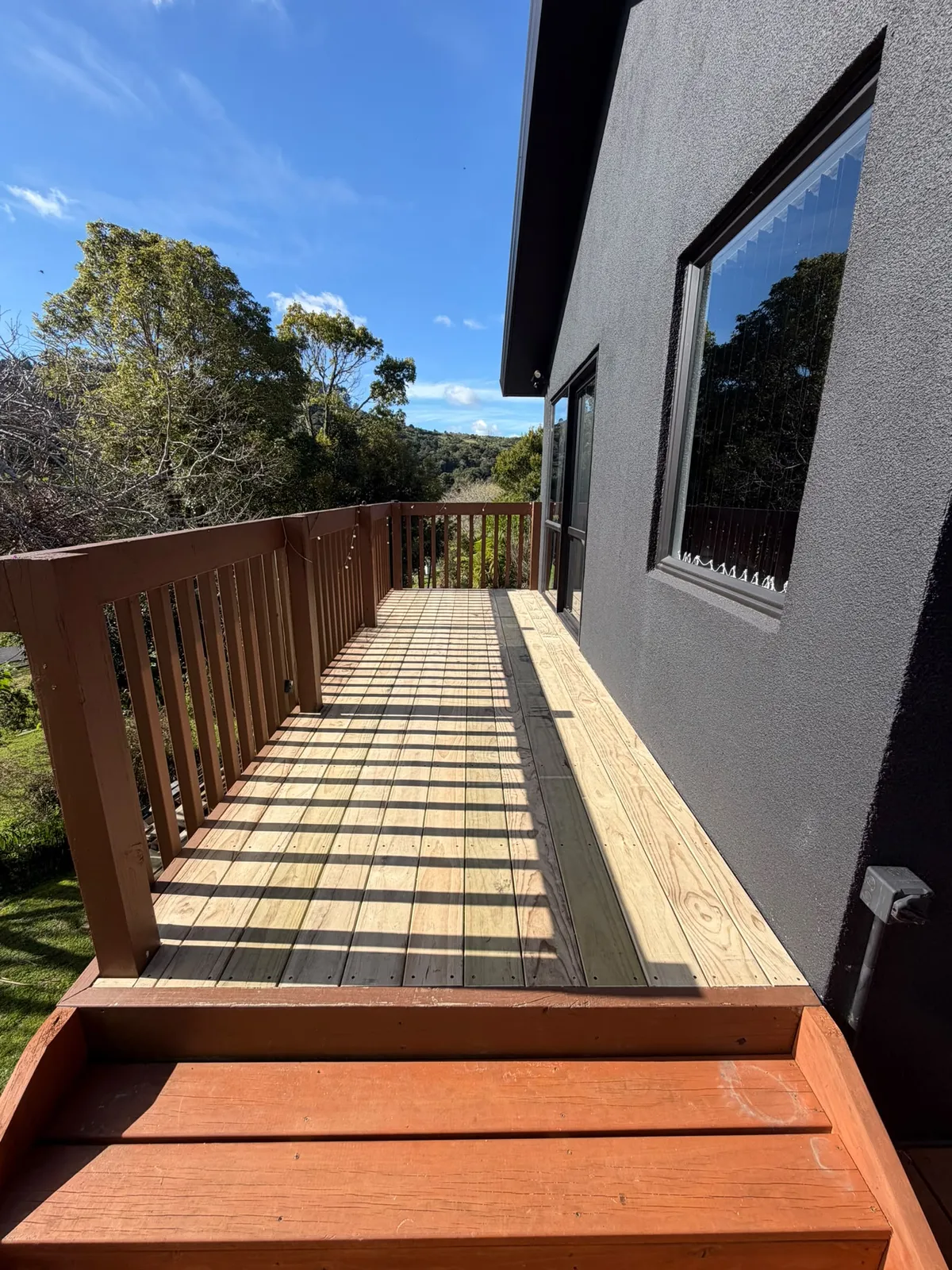
After: pale, fresh boards laid with wider gaps — water drains instead of pooling.
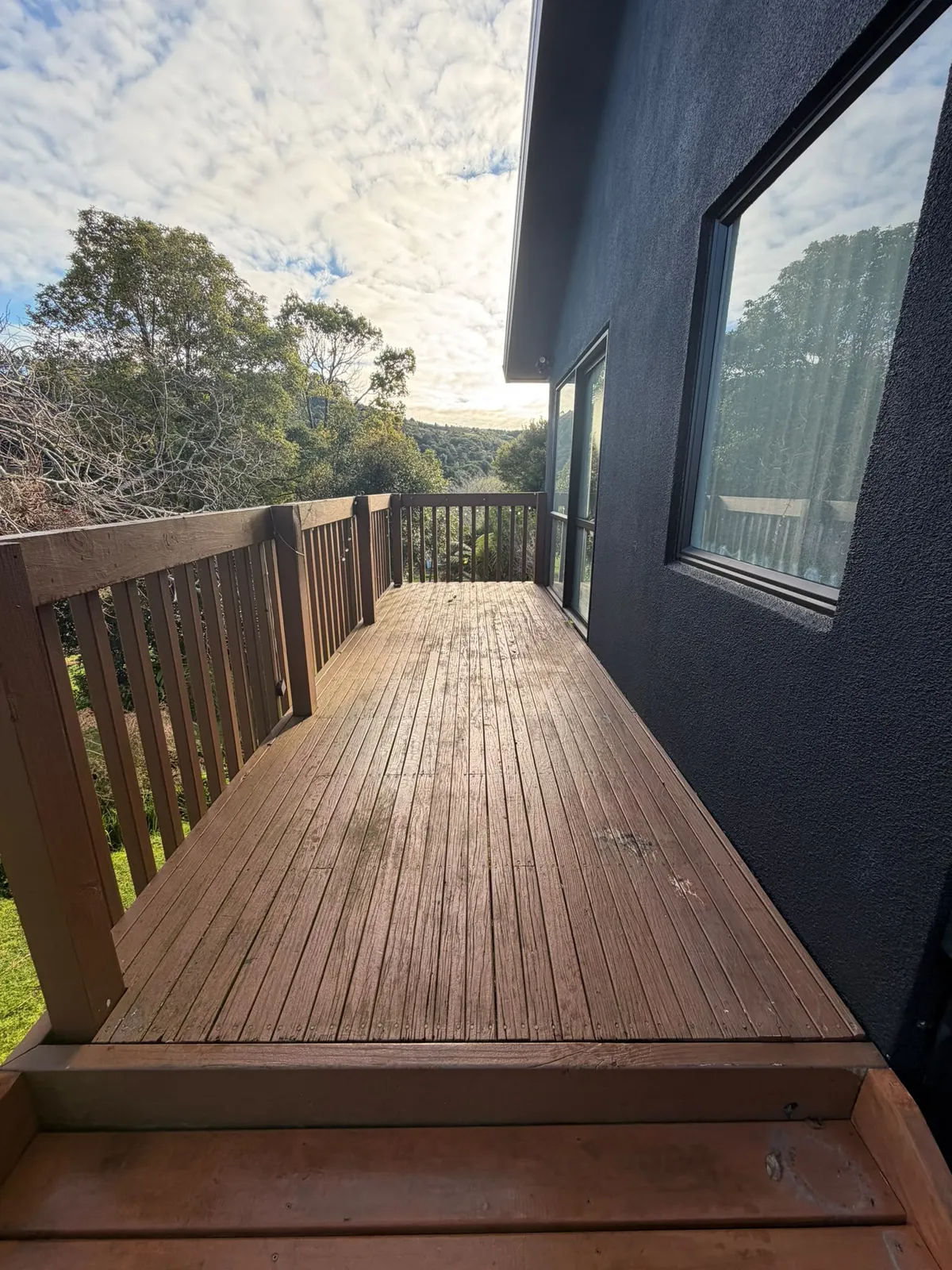
Before: the darker, weathered boards — gaps too tight to drain, moisture trapped between them.
Why deck boards rot before their time
Nine times out of ten it's water sitting where it shouldn't. The usual culprits:
- Gaps that are too tight. Boards laid nearly touching hold water in the groove by capillary action. The gap never dries, the coating fails from underneath, and rot starts at the board edges.
- No airflow under the deck. A deck built low with no cross-ventilation keeps the underside damp, so boards rot from below where you can't see it.
- Failed or missing coating. Unsealed end grain and screw holes drink water like a straw.
- Poor-quality or undertreated timber. Boards that look fine in the stack can let go early once they're outside in NZ weather.
- Debris in the gaps. Leaves and dirt hold moisture against the boards and block drainage.
How wide should gaps between deck boards be?
As a rule of thumb on NZ decks:
- Treated pine: 5–6 mm between boards (boards shrink as they dry, so a gap that looks wide on day one settles to look right).
- Hardwoods like kwila: 4–5 mm — denser timber moves less.
- Composite: follow the manufacturer's spec, usually 5–6 mm, with larger expansion gaps at walls and ends.
Too wide and you drop screws and toes through it; too tight and you've built a water trap. The gap is doing a job — letting water and air move through the deck — so it needs to be there on purpose, not by accident.
Relay or full replacement? How to tell
A relay is usually enough when:
- The frame, joists and posts are still sound (no rot, no major rust on fixings).
- The problem is the decking boards themselves: rot, cupping, splits, springy spots.
- The deck structure is level and was built to code in the first place.
You need a full replacement when:
- Joists or bearers are rotten or badly rusted at the fixings.
- The frame was undersized, unlevel, or missing proper connections.
- The deck is attached to the house without a proper ledger or flashing.
- You're changing the layout, size or height of the deck.
On this balcony job the frame passed the poke test, so a relay gave the owner a like-new walking surface for a fraction of a rebuild — and the old boards went off site the same day.
If you're not sure which camp your deck is in, lift a board near a corner and have a look at the joist underneath, or send us a few photos and we'll tell you straight.
What does a deck relay cost in NZ?
A relay is mostly labour: pull up, inspect, relay, fix down. For a small deck like this 2 × 5 m balcony it's typically a one-day job. Costs scale with:
- Deck size and board choice — see our deck cost guide for per-m² figures by material.
- Board material — treated pine is the budget option; kwila or composite cost more up front but hold up better in wet spots.
- Access — balconies and side yards where boards have to be carried by hand add time.
- Repairs found underneath — the odd joist sister or blocking is cheap; a rotten bearer changes the job.
Because the frame is reused, a relay usually lands well below half the cost of a full rebuild of the same size.
Keeping a relaid deck sound
- Sweep the gaps each autumn so leaves don't hold moisture against the boards.
- Re-coat on schedule — oil or stain per the product's instructions, and don't skip the end grain.
- Keep it clear — don't let planters, mats or boxes sit flat on the boards year-round; they trap water underneath.
- Walk it once a year — a new squeak or springy spot is cheap to fix early and expensive to ignore.
Related Articles
- How Much Does a Deck Cost in NZ? (2026 Pricing Guide)
- Kwila vs Pine Decking: Which is Best for NZ Climate?
- Composite Decking NZ: Pros, Cons & Cost vs Timber
- Do I Need a Building Consent for a Deck in Franklin District?
Get a free quote for your deck repair
Solid Foundations Building relays, repairs and rebuilds decks in Franklin, Pukekohe, Papakura, and Waiuku. Send a photo of the tired deck and we'll tell you honestly whether it needs a relay or a rebuild.
WhatsApp me at +64 27 951 5272 with a few photos, or request a free on-site quote.
Need help with your project?
I offer free on-site quotes in Franklin, Pukekohe, Papakura, and Waiuku.