
Short answer: under the Fencing Act 1978, neighbours split the cost of an adequate boundary fence 50/50, unless a covenant on the title or an agreement between you says otherwise. If you can't agree, you serve a written fencing notice. Your neighbour then has 21 days to object with a cross-notice, and if they say nothing, they're treated as having agreed. Disputes go to the Disputes Tribunal, which hears claims up to $60,000 since January 2026.
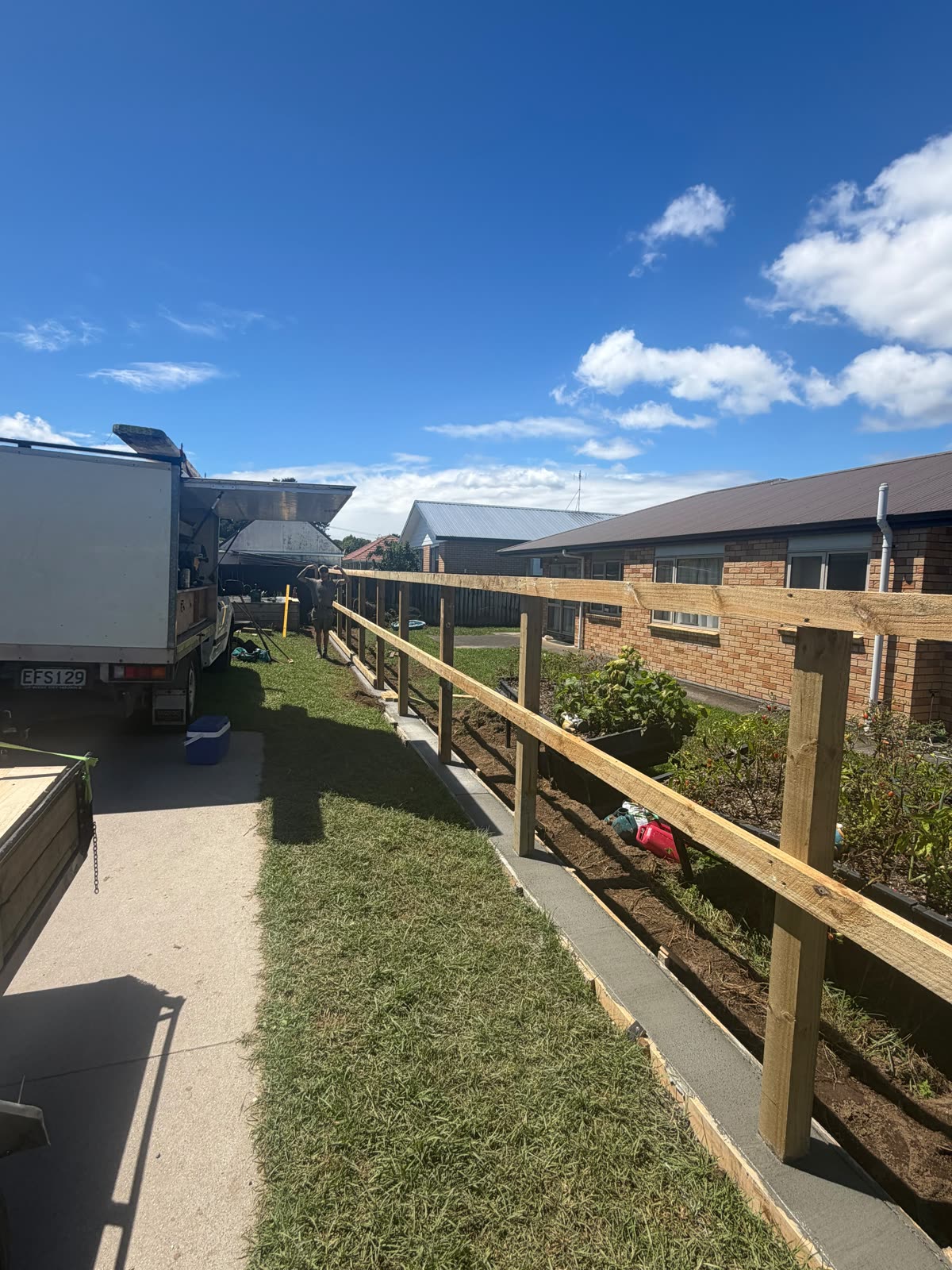
A boundary fence in Papakura at the framing stage. The posts sit on the line between two sections, so the fence belongs to both of them.
A boundary fence has two owners. You can't put up a new one, or pull the old one down, without your neighbour having a say. They can't refuse to pay their share of a reasonable fence just because they'd rather not spend the money. The Fencing Act sets out how that works. Most of the time it never gets used, because neighbours talk, agree on a fence and split the quote. This guide covers that conversation first, then the formal process for when it doesn't work.
This is general information, not legal advice. For a dispute that's already heated, talk to Community Law or a lawyer.
Who pays for a boundary fence
The default rule is equal shares. Adjoining occupiers split the cost of work on a boundary fence: building, replacing, repairing or maintaining it, including site preparation and any survey needed.
The split is equal for an adequate fence. The Act defines that as a fence that is "reasonably satisfactory" for the purpose it serves. A 1.8 m paling fence between two town sections is usually adequate. A post-and-rail or wire fence often is on a lifestyle block.
The exceptions:
- You want something better than adequate. If you want a horizontal slat fence or a taller screen when a standard paling fence would do the job, your neighbour only has to pay half of what an adequate fence would cost. You pay the difference.
- There's a fencing covenant on the title. Many subdivisions have one. It often says the developer doesn't contribute to boundary fences, and it can set out who pays for what. Check your certificate of title before you do anything else.
- You've agreed on a different split. Any written agreement between you can override the 50/50 default.
- One neighbour damaged the fence. Whoever caused the damage pays the full repair cost, whether it was a reversing car, a tree that wasn't kept trimmed, or stock pushing through.
- Pools. If your neighbour's pool needs a compliant barrier along the boundary, your contribution is capped at half the cost of an adequate ordinary fence. The pool owner pays the rest.
Tenants and landlords. The Act applies to owners, and to tenants only if they hold a lease of 10 years or more. If you rent, the fence is your landlord's responsibility. If the house next door is rented, deal with the owner.
Start with a conversation, not a notice
Most fence disagreements come from one neighbour being surprised, not from the cost itself. Before any paperwork:
- Walk the fence line together. Agree on what's wrong with the old fence, or whether there's a fence there at all.
- Agree on the fence type and height. A paling fence, how high, and what timber.
- Get a written quote that you can both read. A quote that shows the length, height, materials and removal of the old fence makes it easy to check you're comparing like with like. If your neighbour wants a second quote, that's reasonable.
- Agree on who organises the build and when it starts.
- Put the agreement in writing, even if it's just an email you both reply "agreed" to. If either house sells halfway through, that email matters.
If your neighbour is happy, you're done. The notice process below is only for when they won't engage, can't be found, or disagree.
The fencing notice: what it must include
If you can't agree, the formal step is a fencing notice under section 10 of the Act. It has to be in writing and include:
- A statement that it's served under the Fencing Act 1978
- Both parties' names and addresses
- The boundary to be fenced
- The type of fence and how it will be built
- Who will build it
- The estimated total cost, and how the cost will be shared if not equally
- How the materials will be bought and paid for
- The date work will start
- A statement that your neighbour has 21 days to object and make counter-proposals by cross-notice, and that if they don't, they'll be treated as having agreed
Sign and date it, keep a copy, and deliver it in person or by registered post. Attaching the builder's quote helps, because it backs up your cost estimate. The full text of the Act is on legislation.govt.nz.
The 21-day timeline
| When | What happens |
|---|---|
| Day 0 | You serve the fencing notice |
| Days 1–21 | Your neighbour can send a cross-notice objecting or making counter-proposals. Don't start work. You can't recover costs for work done in this window |
| Day 22, no reply | Your neighbour is treated as having agreed. You can start the work and recover their share as set out in the notice |
| Cross-notice received | You have 21 days to try to agree |
| Still no agreement | Either of you can take it to the Disputes Tribunal or the District Court. Don't build until it's resolved, or you risk paying for all of it |
The Disputes Tribunal is the usual route. It's cheaper than court, you don't need a lawyer, and since 24 January 2026 it can hear claims up to $60,000, which covers almost any residential fence. Claims over $30,000 carry a higher filing fee.
Where fence disputes usually start
"The old fence is fine." The first question a tribunal asks is whether the existing fence is adequate. A fence that leans, has rotten posts or no longer keeps the dog in probably isn't. A fence that's weathered but solid probably is. Photos of rot at the base of the posts and palings that have come away help your case.
"It's too expensive." Your neighbour can object that the fence you've proposed costs more than it needs to. A second quote for the same fence answers that quickly. If the extra cost comes from a fancier fence you want, offer to pay the difference.
"That's not where the boundary is." The posts should sit on the boundary line, or as close to it as practicable. On an older property where the boundary pegs have gone, a surveyor can re-mark the line before the fence goes in. That's far cheaper than moving a finished fence later.
Trees and hedges on the line. Roots lift posts and branches push palings off. If a neighbour's tree damages the fence, the District Court can award compensation and order the tree trimmed or removed. Most people sort it out over the fence long before that.
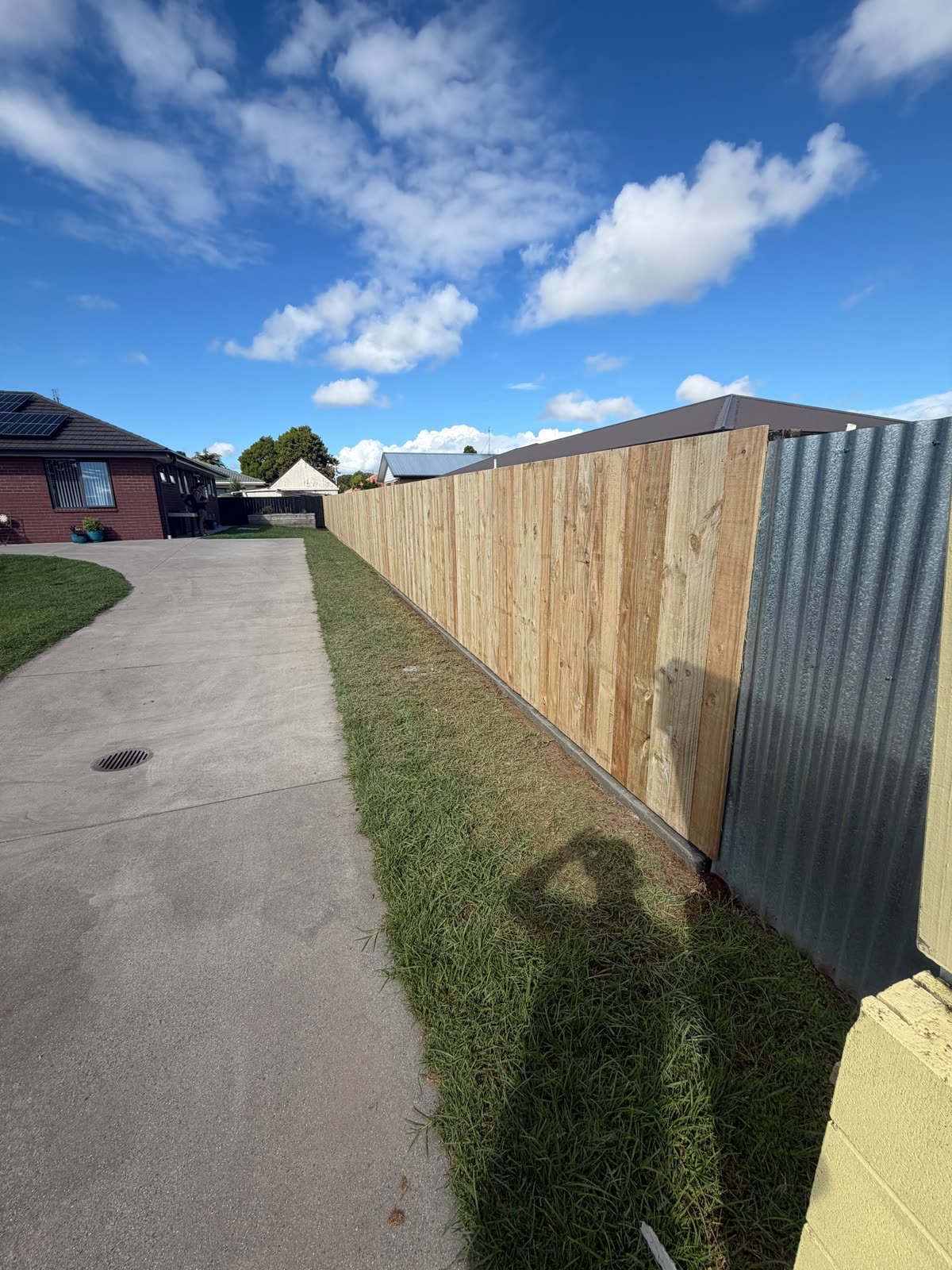
The same Papakura fence, finished. Palings on, the line straight, and the new fence tied into the old corrugated fence at the end.
Urgent repairs: storm damage and fallen fences
If a fence is suddenly damaged or destroyed, for example by a storm, a fallen tree or a car, and needs fixing straight away, either neighbour can do the work without serving a notice first and recover half the cost. This is for genuine urgency, like stock getting out, a dog that can escape, or a fence that's unsafe. Repair it like for like. Upgrading to a better fence still needs your neighbour's agreement. If one of you caused the damage, that person pays the lot.
Consent, height and planning rules
A boundary fence up to 2.5 m high doesn't need a building consent. Pool barriers are the exception. The district plan can still limit fence height, especially on the front boundary, so check before you build anything tall. Our building consent exemptions guide covers both.
What a boundary fence costs
Fence prices depend on length, height, timber, ground and whether the old fence has to come out. See our fence cost per metre guide for starting prices per metre. For a shared fence, the simplest arrangement is one quote that both neighbours see, with each paying half.
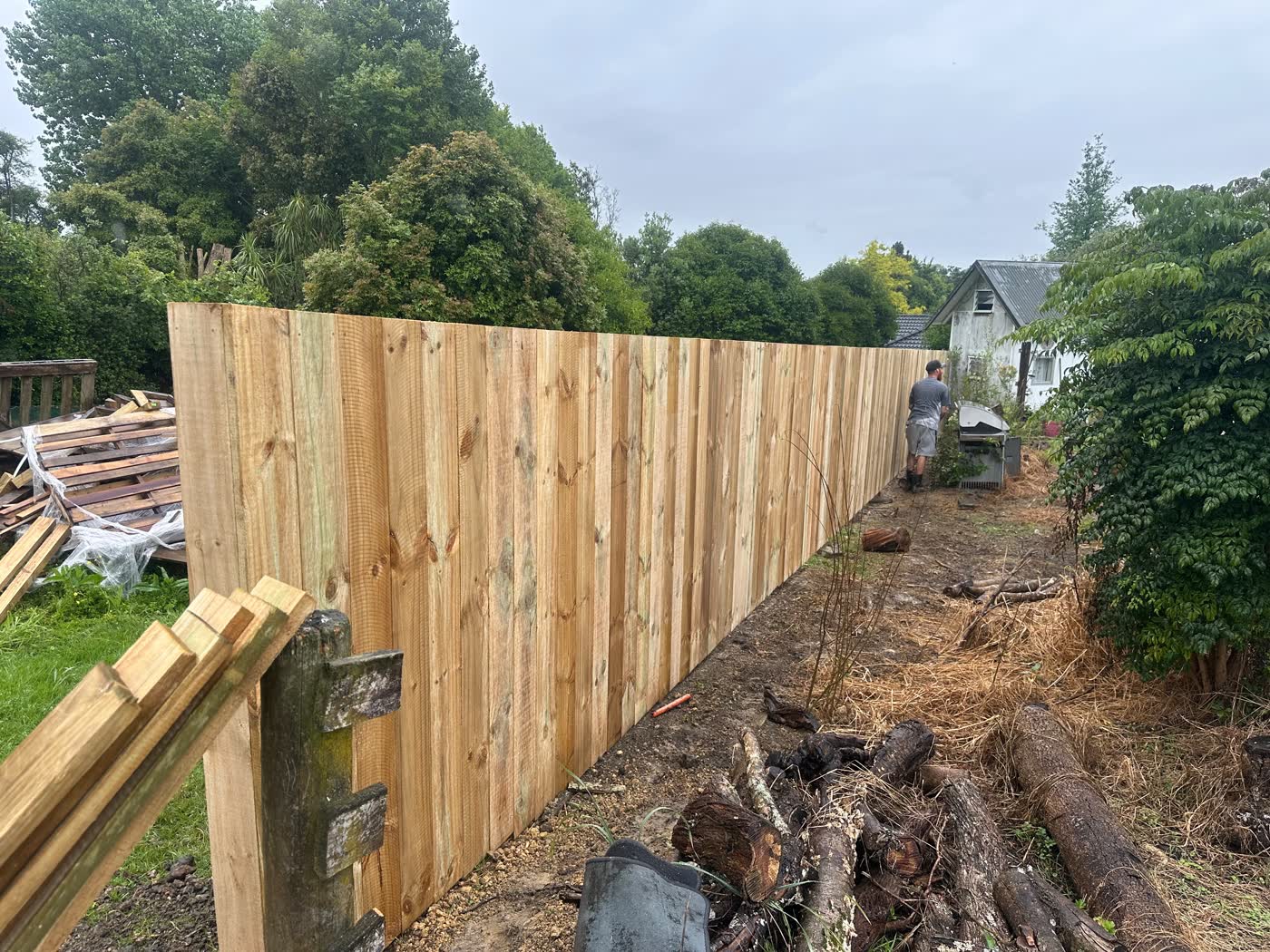
Waiuku: the old fence line cleared out and the new fence going up. Removing the old fence and the rubbish is part of the job, and should be in the quote.
Related Articles
- Fence Cost Per Metre NZ: Timber, Aluminium & Colorsteel
- Driveway & Farm Gates NZ: Sizes, Posts & Install Cost
- Building Consent Exemptions NZ: What You Can Build
Get a quote both neighbours can read
Sorting out a boundary fence with the neighbour? I'll come out, measure the line, and give you a written quote that sets out the length, height, timber and removal of the old fence, so you've both got the same numbers in front of you.
WhatsApp me at +64 27 951 5272, or request a free on-site quote in Franklin, Pukekohe, Papakura and Waiuku.